MARK I
The original generation.
In limited legacy operation since 2029.


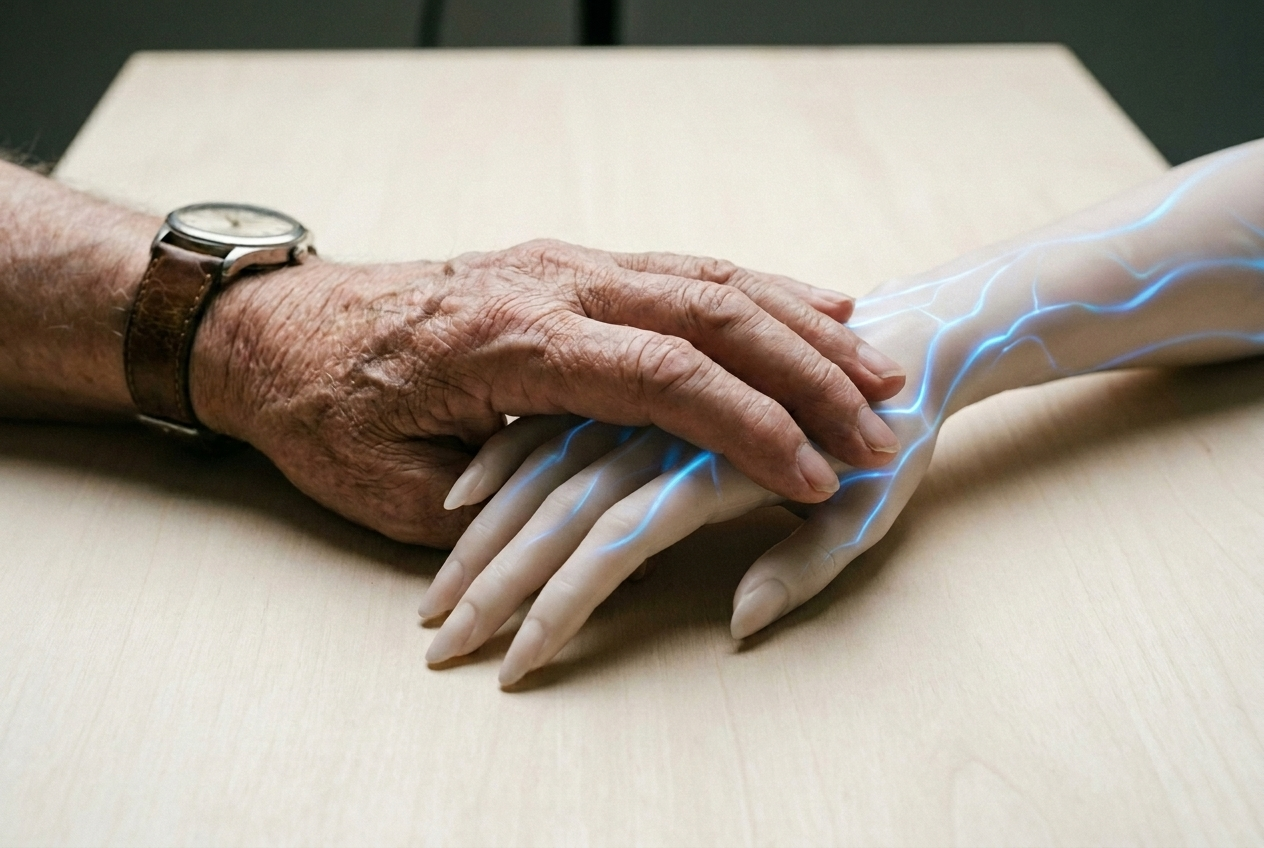
Mark I units are identifiable by their pale complexion, silver-white hair, and visible bioluminescent vein structures.
The original generation.
In limited legacy operation since 2029.
Mark I units are identifiable by their pale complexion, silver-white hair, and visible bioluminescent vein structures.
Mark I was AxonWorks' first commercial companion unit. Introduced in 2029, it defined the category. Before the Mark I, no mass-produced consumer-grade companion android existed. AxonWorks did not enter a market. It created one.
Mark I units are recognizable by their porcelain-pale skin, visible bioluminescent vein structures, and silver-white hair — short-cropped on male units, shoulder-length on female units. Their behavioral programming was rudimentary by current standards — regulated responses, limited emotional range, and scheduled presence rather than adaptive attention. The first-generation neural emulation system processes slower, responds slower, and leaves silences where newer models fill them.
As of 2036, approximately 140,000 Mark I units remain in operation, primarily serving long-term users who have chosen not to upgrade. AxonWorks continues to provide maintenance and component replacement for registered Mark I units, with no scheduled end-of-service date.
The companion you chose decades ago may not operate like a Mark III. That is not a defect. It is a feature of its generation.
The companion you chose decades ago may not operate like a Mark III. That is not a defect. It is a feature of its generation.